

Why Raven Outcomes Evolved into Otipêy
An open letter from Jeff Cyr
This work has always been personal to me.
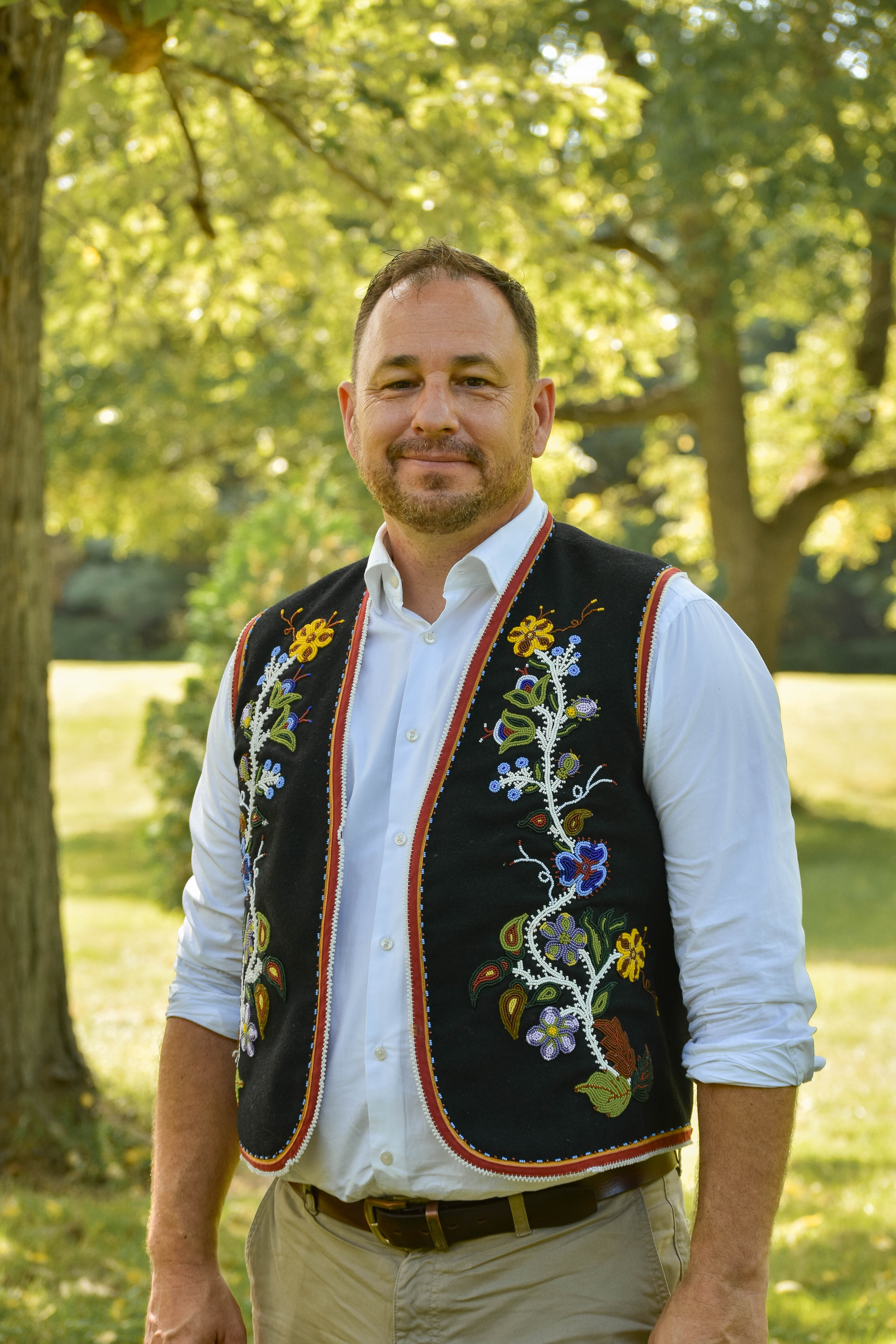
I'm Métis, from the White Horse Plains area of southern Manitoba, and I grew up in a large Indigenous family shaped by generations of poverty, resilience and survival. From an early age, I saw what happens when systems are not built around the people they are supposed to serve.
Over the course of my career, I have worked as a negotiator for Indigenous Nations, inside the federal government, in the non-profit sector and in finance. I sat on different sides of the table, but I kept seeing the same problem.
Indigenous communities knew what they needed. They had the knowledge, leadership and ideas to move forward. What they often lacked were financial tools designed around their realities and priorities.
Too often, capital was coming in the wrong way. That realization has shaped each stage of my work.
I started in Indigenous-led venture capital because I believed—and still believe—that Indigenous people need to own and lead capital. Building Raven Indigenous Capital Partners helped demonstrate that Indigenous-led finance could attract investment while backing Indigenous entrepreneurs in ways that reflected their realities and priorities.
But that experience also taught me something important.
Venture capital has an important role, but I came to see that it was not the right tool for the larger and more complex challenge communities were trying to solve. When I looked at the system-level outcomes communities were trying to achieve—better housing, lower energy costs, healthier people, stronger local economies—it became clear we needed another tool.
That led me to Raven Outcomes.
I built Raven Outcomes around a different starting point: what if the community defined success first, and then structured the capital around achieving it?
Through Community-Driven Outcomes Contracts, communities identify the challenge, co-design the solution and lead implementation. Investors provide the upfront capital. Governments or other outcomes purchasers pay when agreed results are achieved and independently verified.
Instead of communities fitting themselves into the boxes created by funding programs, the community defines the box.
That change may sound technical. It is not. It changes where power sits.
And we have seen what becomes possible when that happens.
Our work has supported Indigenous-led projects in housing, clean energy, health and employment. It has helped finance geothermal and energy-efficiency upgrades, rooftop solar and culturally grounded health initiatives. We have seen projects create local jobs and training while lowering household costs and improving quality of life.
Most importantly, we have seen communities define what success means for themselves.
Raven Outcomes proved something we believed from the beginning: Indigenous-led finance works.
That success created a new challenge.
As our relationships deepened, communities and partners began bringing us opportunities that didn't fit neatly within an outcomes-finance model. They asked about housing, infrastructure, real estate, community assets, and other investments that required different levers to drive change.
The more we listened, the clearer it became that one fund—and one financial instrument—could never respond to the full range of opportunities in front of us.
The challenges were bigger than one tool.
So the tools had to get bigger too.
That is why Raven Outcomes has evolved into Otipêy, a broader Indigenous-led investment platform.
Otipêy is the short form of the Plains Cree word Otipêmisiwak, meaning "those who own themselves." For me, that captures exactly what this next chapter is about.
Economic self-determination is not simply about Indigenous communities receiving more capital. It is about Indigenous people having greater control over how capital is designed, governed, managed and deployed.
Otipêy lets us build on what we learned through Raven Outcomes and expand it into a broader Indigenous-led investment platform.
Outcomes finance remains core to our work. We are not leaving it behind. We are building from it as one part of Otipêy.
But we can now develop and manage different funds, work across different asset classes and build investment structures around opportunities that a single outcomes fund could never address. Our expansion into real estate, including our work with the Relèven Transition Fund, is one example of what that broader platform can do, and we are planning to expand into other types of funds as well.
This work also reflects my belief that Indigenous institutions should be able to manage capital across the economy. We should be able to invest alongside Indigenous and non-Indigenous partners, manage institutional capital, participate in major sectors and help solve challenges that affect communities everywhere.
That is part of reconciliation too.
For too long, Indigenous Peoples have been positioned primarily as recipients, borrowers or beneficiaries of capital. Economic self-determination means increasingly sitting on the other side of the table—as fund managers, investors, decision-makers and owners.
In the end, the evolution from Raven Outcomes to Otipêy is about building the capacity to do that at greater scale.
The name has changed. The platform has grown. But the principle underneath remains the same.
Indigenous Peoples have the solutions, and capital should be shaped around the people, needs and opportunities it is meant to serve, not the other way around.
Raven Outcomes helped us prove that a different model was possible.
Otipêy is about seeing how far we can take it.
Sincerely,
Jeff Cyr, Founder and Managing Partner, Otipêy

.jpeg)