
BACKGROUND
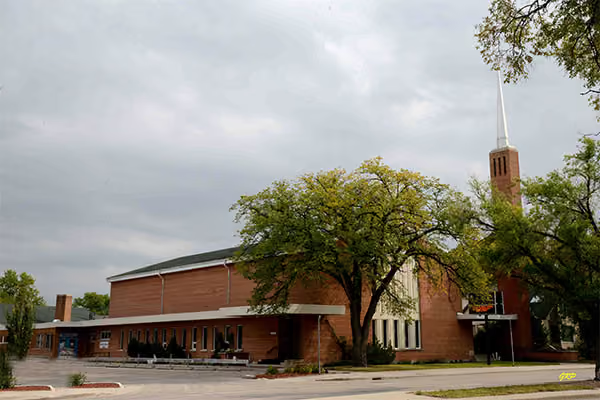
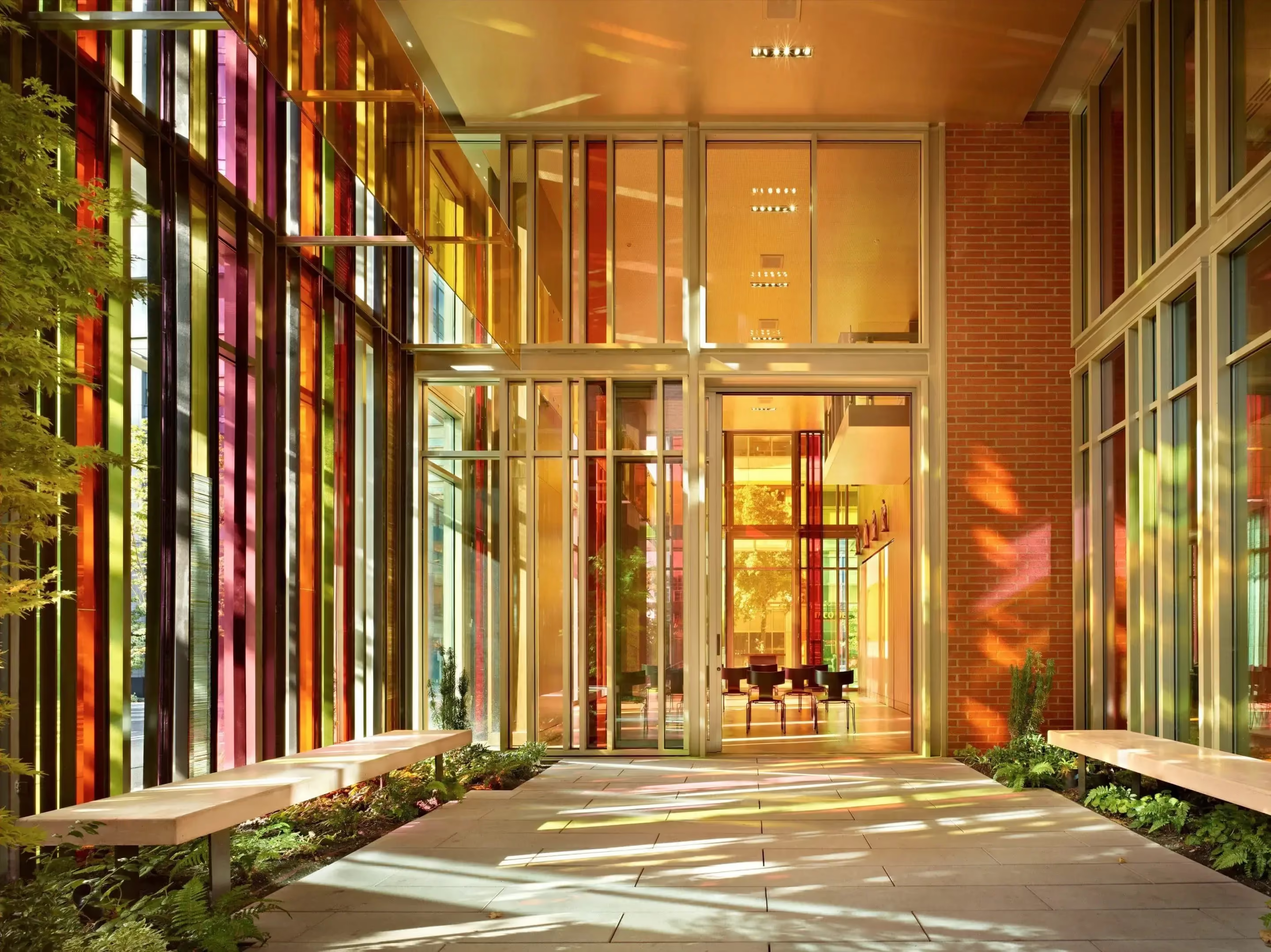
Located in the heart of downtown Seattle, Gethsemane Lutheran Church stands at the intersection of faith, social need, and urban opportunity. Over the past decade, the congregation has already demonstrated remarkable leadership and innovation: Gethsemane previously undertook a major redevelopment that transformed its site into a mixed-use community asset—creating program space for community organizations on the lower level and building affordable housing above the church in partnership with local non-profits. This earlier success formed the first chapter of Gethsemane’s transformation. By 2025, however, new challenges emerged. Two long-term renters had moved out of the building, leaving significant underused space at a moment when community demand for accessible, mission-aligned venues continued to rise. The church once again faced a defining choice: reduce operations, or reimagine the next chapter of their mission. Seeking clarity and a renewed strategic direction, Gethsemane partnered with Relèven to explore how their building could once again serve as a vibrant, revenue-generating community hub—one that advances both financial sustainability and spiritual purpose. Through extensive analysis of finances, property potential, neighborhood needs, and stakeholder insight, the congregation began shaping a bold second chapter rooted in long-term sustainability, justice, and impact.
PHASE 1: DISCERNMENT AND ANALYSIS
Objective: Understand community needs, property potential, and congregational capacity to inform a viable hub model.
Key Actions by Relèven
- Conducted a five-part scan covering finances, building condition, congregation input, neighborhood stakeholders, and scenario development
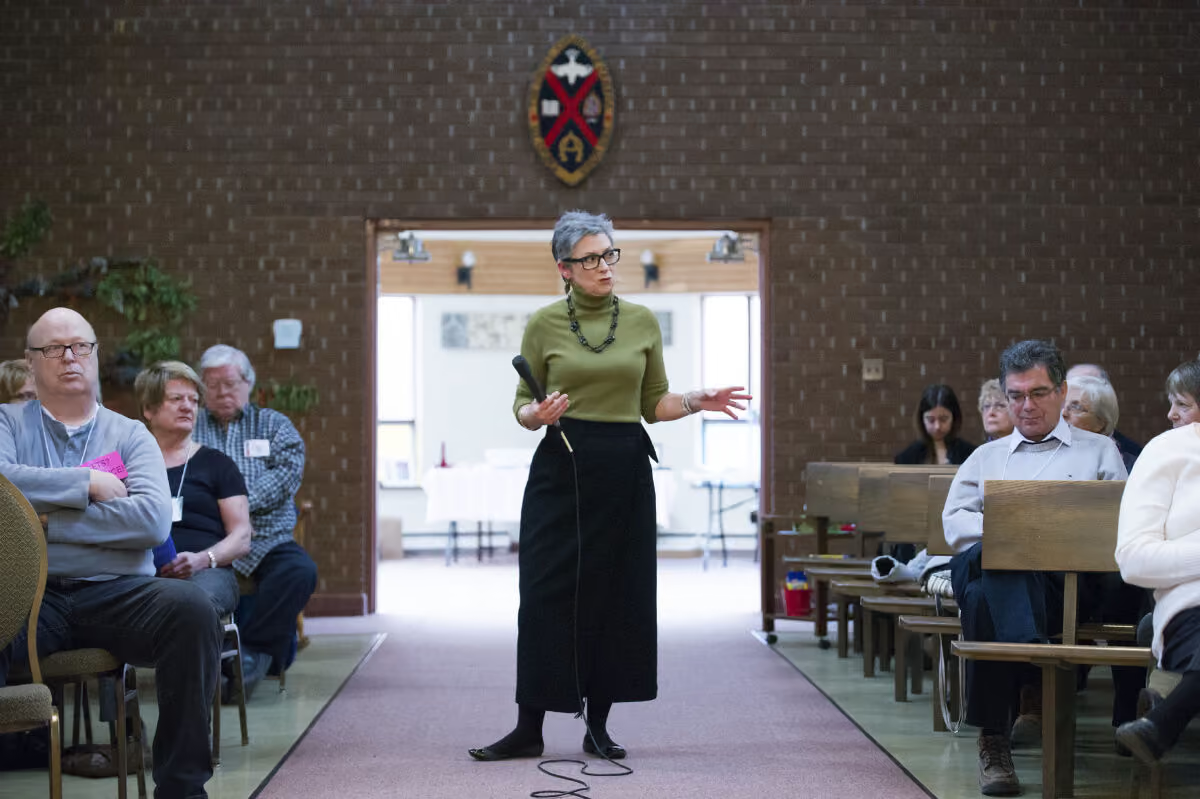
- Facilitated a congregational workshop identifying priorities: financial stability, partnerships rooted in justice and inclusion, and expanding community access while retaining worship identity
- Mapped the property’s spatial potential (~25,000 sq ft total; ~15,000 sq ft rentable)
- Reached out to over 46 community stakeholders - corresponded via email or survey with 25 and led in-depth interviews with 12
- Findings showed strong interest from nonprofits, artists, and social enterprises seeking affordable downtown space and alignment with Gethsemane’s mission
PHASE 2: SCENARIOS AND STRATEGY DEVELOPMENT
Objective: Determine operational models balancing mission impact and financial sustainability.
MARKET AND ROI ASSESSMENT
At 80% occupancy, Gethsemane’s rentable 15,000 sq ft could yield significantly more revenue per year, positioning the site among Seattle’s Class B office benchmarks.
THREE SCENARIOS EVALUATED CONGREGATION-LED ACTIVATION
Volunteer-driven growth using known partnerships. Pros: Full control, minimal costs, leadership development Cons: Limited capacity, slower scale.
BROKER-SUPPORTED HUB DEVELOPMENT
Professional partner attraction while church retains operations. Pros: Wider network, stronger tenants, scalable partnerships Cons: Added cost, moderate volunteer load.
FULL-SERVICE HUB WITH EXECUTIVE DIRECTOR
Broker + ED overseeing daily operations Pros: Most sustainable, highest community reach, frees congregation for ministry Cons: Higher overhead, governance complexity. Recommendation: Relèven proposed a hybrid strategy — begin with Broker-Supported Hub Development, evolving to a Full-Service Hub as partnerships and funding mature. This phased approach maximizes near-term returns while building long-term capacity and reducing volunteer burnout.
IMPACT AND OUTLOOK
- Community Reach: 46 organizations engaged; multiple nonprofits and social initiatives ready to collaborate.
- Economic Impact: Projected significant increase in annual revenue potential; surpluses reinvested into programming and maintenance.
- Faith & Mission Integration: Model centers justice, inclusion, and service to neighbors — shifting from ‘church questions’ to ‘community questions.’
- Urban Leadership: Positions Gethsemane as one of Seattle’s leading faith-anchored social hubs.
- Replicable Model: Demonstrates how mid-sized urban churches can leverage property for both financial viability and social transformation.
CONCLUSION
Gethsemane Lutheran Church’s partnership with Relèven showcases how an aging downtown church can re-emerge as a center of hope, service, and sustainability. Through structured governance, professional management, and mission-aligned activation, Gethsemane is poised to host everything from immigration services and advocacy to food programs and worship — all under one roof.
This case underscores a core truth of Relèven’s work: when sacred spaces are reimagined with courage and community at the center, they don’t just survive — they lead.