
BACKGROUND
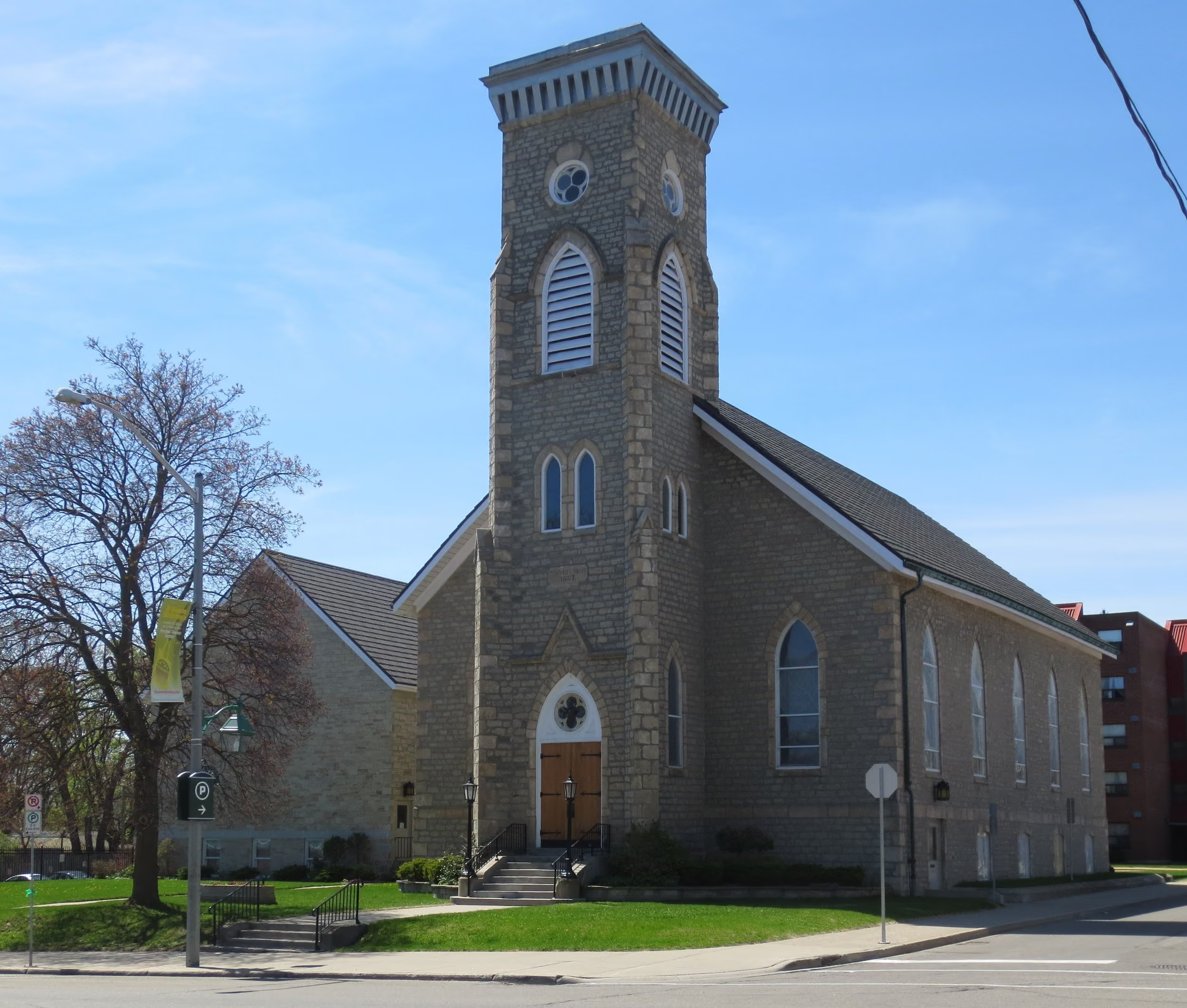
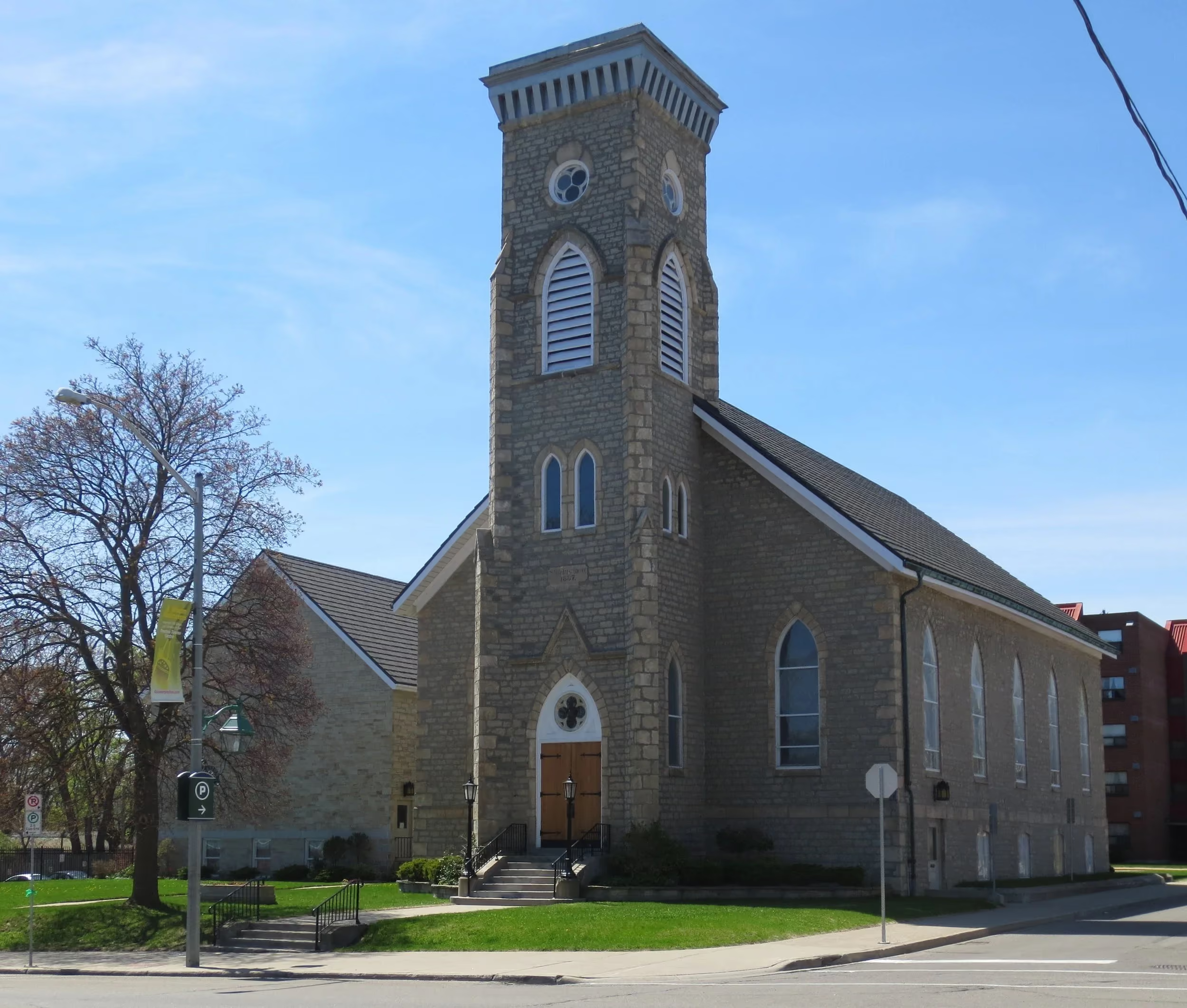
St. Peter’s Lutheran Church in Cambridge, Ontario faced a challenge common to many faith communities: rising operating costs, aging infrastructure, and declining or unstable revenue streams. While the building was well-maintained, significant portions of its 13,000 sq. ft. were underutilized, and rental income was insufficient to cover expenses. In partnership with Relèven, St. Peter’s embarked on a transformation journey to reposition its property as a shared community hub—one that could generate sustainable revenue while responding to local needs such as youth programming, wellness services, arts space, and community gathering. This vision led to the creation of Preston Commons at St. Peter’s, a new model of shared space that blends ministry, community services, and social enterprise under one roof.
PHASE 1: VISIONING, ANALYSIS & GOVERNANCE FOUNDATIONS
Objective: Understand the building’s potential, align congregational vision, and establish the foundations for a sustainable hub model.
Key Actions by Relèven
- Conducted a comprehensive “Lifting the Lid” feasibility process, including financial, building, neighbourhood, and stakeholder scans.
- Identified over 13,000 sq. ft. of rentable space, including classrooms, fellowship areas, and sanctuary usage opportunities.
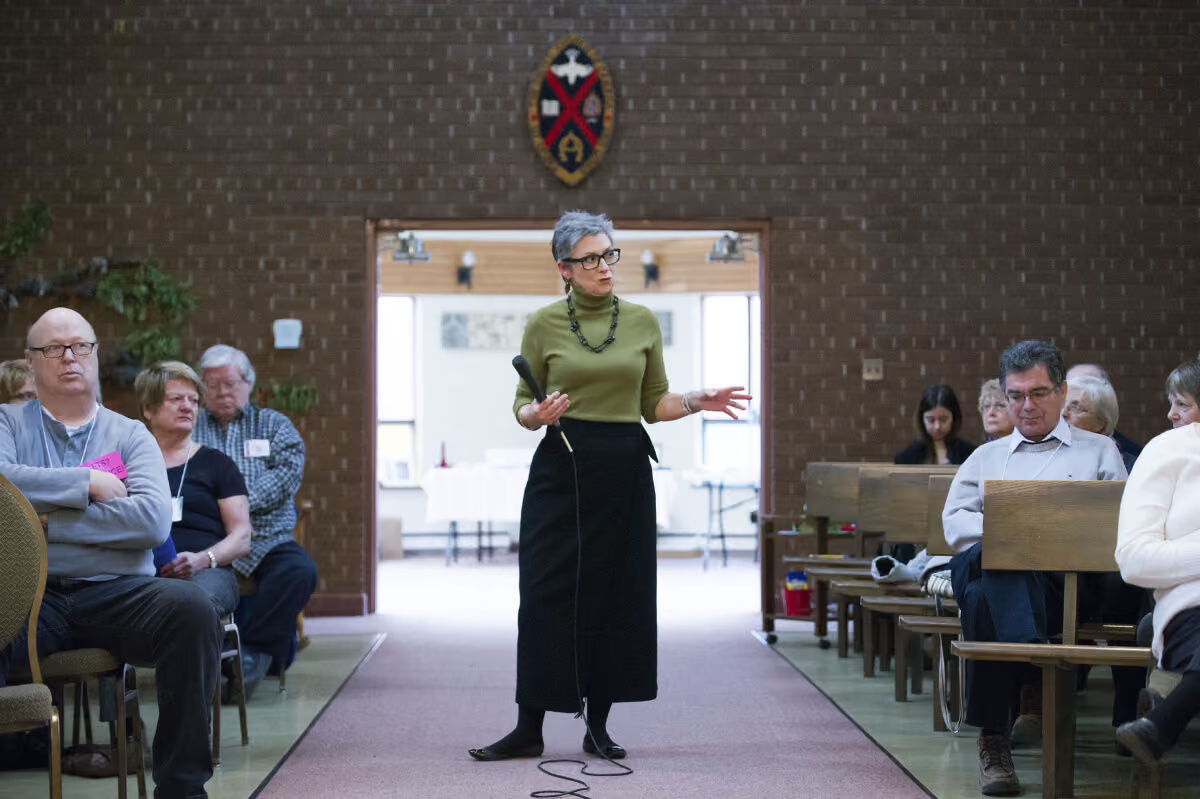
- Facilitated congregational engagement confirming strong support for a community hub model combined with long-term development potential.
- Assessed community needs, highlighting priorities such as affordable housing, youth programming, and community health services.
- Established a governance structure through the Ministry of Preston Commons, clarifying decision-making and operational oversight.
Findings
- Rental revenue alone could not sustain operations without a new model.
- Underused space presented immediate revenue opportunities.
- Strong alignment between congregational mission and community needs created a clear pathway forward.
PHASE 2: OPERATIONS, PARTNERSHIPS & GROWTH
Objective: Activate the building as a community hub through operations, partnerships, and revenue generation.
Key Actions by Relèven
- Implemented operational systems, including centralized booking, document management, and financial tracking.
- Developed rental strategies balancing market-rate tenants and mission-aligned partners.
- Established pricing structures, contracts, and onboarding processes for user groups.
- Supported branding and identity development for Preston Commons.
- Built a diverse ecosystem of users.
Key Results in 2025
- Doubled gross revenues.
IMPACT AND LESSONS LEARNED
- From Deficit to Surplus: The church entered 2025 budgeting for a deficit. Through Relèven’s management of rentals, significant revenue was generated while freeing up St. Peter’s time previously spent on building-related operations. This allowed St. Peter’s to focus more specifically on community outreach and fundraising, achieving a significant year-end surplus and reversing its financial trajectory.
- Revenue Growth: Rental income nearly doubled year-over-year.
- Community Activation: The building now hosts arts, sports training, therapy services, worship communities, and youth programming.
- Operational Maturity: New operating systems enabled data-driven decision-making and scalable growth.
- Partnership Model: A mix of long-term tenants and short-term users created both stability and flexibility.
- Underutilized Potential: Despite strong growth, most spaces remain below the 65– 75% sustainable usage range, highlighting significant room for expansion.
- Governance Matters: Clear structures and defined roles were critical in enabling efficient decision-making and reducing friction between church and operations.
CONCLUSION
Preston Commons at St. Peter’s represents a powerful example of how a local church can move from financial vulnerability to emerging sustainability and growing community impact. As the model continues to scale, Preston Commons is positioned to deepen its impact— expanding partnerships, increasing utilization, and exploring long-term development opportunities. This case study reinforces a core principle of Relèven’s work: with the right strategy, governance, and partnerships, underused sacred spaces can become thriving centers of community life.